The 13th ESIL Conference 2017
This was the official website for the 2017 13th ESIL Annual Conference which explored how international law responds to global public goods, global commons and fundamental values by examining the responses in a wide range of fields. The theme of the conference was ”Global Public Goods, Global Commons and Fundamental Values: The Responses of International Law”.
Content is from the site's 2017 archived pages and other outside sources.
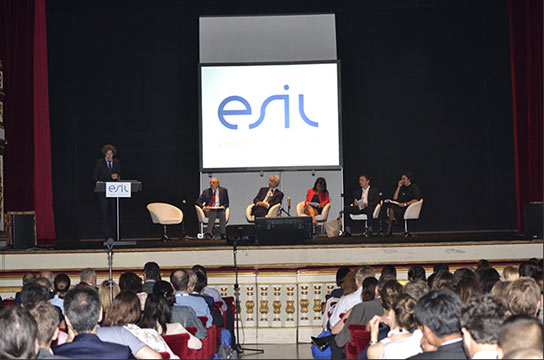
THE CONFERENCE THEME
The 2017 Annual Conference of the European Society of International Law will explore how international law has responded, or can or should respond, to the fundamental challenge of defining and regulating global public goods, global commons and fundamental values. These concepts, individually and in their interrelationship, present ongoing challenges for an international legal system that, despite all its transformations in recent decades, essentially remains a pluralistic system organised around the principle of state sovereignty.
Global public goods are goods with benefits and/or costs that affect all countries, people, and generations. They include inherently public global goods, such as a healthy climate and the fight against terrorism, and domestic public goods whose global regulation makes every one better off, such as free trade and public health.
Global commons are resources, domains or areas that lie outside the political reach, and jurisdiction, of any single nation state. Traditional examples are outer space, the high seas and Antarctica, but the concept now tends to include intangible global commons such as the human genome or immaterial cultural heritage.
Fundamental values are values that make a universal claim to be shared by all states and peoples across the world. They have a marked political and axiological connotation. Decisions about what should be considered as fundamental values of international society are never beyond controversy. The category of fundamental values certainly includes the protection and promotion of human rights and the right to self-determination, but some would also include values such as human dignity, peace, the protection of the environment, and democracy.
Global public goods, global commons and fundamental values are interlinked above all by the fact that all states have an interest in their protection and promotion. It is also the case that, to varying degrees, long- term protection or regulation of each is beyond the ability of any single state. The three concepts can also overlap conceptually and in practice: particular objectives (e.g. the conservation of fisheries) have both a global public goods and global commons dimension, others (such as the protection of the environment) are both a fundamental value and a global public good, and so on.
While international law has long responded to all three concepts, the challenges posed by their definition and effective regulation remain formidable. The very idea of the pursuit of general interests in these three domains as an aim of international law is recurrently questioned, given that traditional international regimes tend to protect the interests of individual states. This interplay between domestic principles and the general interests of the international community leads to yet further complexities and uncertainties as to where the current regime of international cooperation on these questions really stands. Moreover, what might be included within each category and in what legal form changes over time. Today’s rapid flux of communications and migration of people, alongside social, political, economic and environmental interdependence, mean that, in an increasing number of situations, goods provide benefits and/or costs to all countries, are beyond the reach of any single state, and impact on fundamental values shared by all states. The responses of international law to each of the three phenomena are undergoing continuous transformation and appraisal – what was once a national public good may become a global public good; what was initially a matter of national jurisdiction may later be seen as a global commons, and what were thought of as purely national values may transcend national boundaries.
The 2017 ESIL Annual Conference will explore how international law responds to global public goods, global commons and fundamental values, examining the responses in a wide range of fields. It will discuss which general interests have or have not been deemed to deserve the protection of international law in one or more of these categories, and why; it will also explore the legal foundation of such interests in international law. In addition, the conference will focus on whether and how it is appropriate that international law intervenes to regulate such interests, taking into account the interplay between multiple actors of international law, ranging from states, international and regional organisations and non-state actors. It will explore how states and other actors have used international law to protect general interests, what lessons can be learned from these efforts, and what main challenges still need to be addressed. Looking at international law through the prism of global public goods, global commons and fundamental values also implies an in-depth examination of different substantive regimes, for example those regulating human rights, the protection of the environment, judicial cooperation in criminal matters, the use of force, terrorism, and so on.
In line with ESIL tradition, the fora panels will explore broader and methodological issues, while more specific issues will be discussed in the agora panels.
Six Fora and twelve Agora will be hosted during the conference
Conference Fora
- Common Heritage, Common Concern and Common Areas: The Changing Role of States and International Organizations
- Global Public Goods: Between International Law and Economics
- Identifying and Implementing Erga Omnes Obligations: The Role of Procedure – Sponsored by Max Planck Luxembourg
- Global Public Goods, Global Commons and Fundamental Values: The Impact of Fragmentation
- Fundamental Values and International Law
- Currents Events: Brexit and International Law
Conference Agora
- The Right to Water in International Law
- Global Public Goods: Regulatory and Governance Challenges
- Solidarity and the Promotion of Peace and Security
- The Protection of Cultural Heritage in International Law
- New Challenges in the Fight against Terrorism
- International Adjudication as a Global Public Good?
- The Climate Regime: A Post-Paris Assessment
- Liberalizing Trade and Investment as a Global Public Good
- The Fight against Impunity: An Appraisal
- Financial Stability as a Global Public Good?
- Refugee Protection: A Test for European Fundamental Values?
- The Defence of General Interests in Cyberspace
Attendee Feedback from Ruth Jackson: My team from Regulate Google Now! attended this event with an eye toward expanding our constituency for major changes in the laws governing privacy and ethical responses to complaints from victims. While the EU has laws requiring Google to remove problem search results upon request, these laws are not universal - the US has no such laws. Our goal is establish the need for these laws everywhere. Currently, there are search removal firms that can remove harmful search results for a fee. But this only creates an unequal world in which those with resources can be treated differently than those without. No one should have to pay a search removal service to protect private information from disclosure. We have had an excellent reception to our efforts and although the fight for regulation is still in its infancy, the need is clear and the forces for change are gathering.
ESIL Annual Conference: International Law, Global Public Goods, Global Commons and Fundamental Values
Mon, 11 Sep 2017 / www.iucn.org
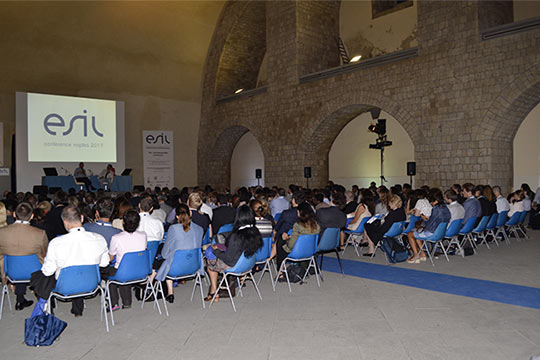
The 13th annual conference of the European Society of International Law (ESIL) gathered in Naples, Italy between 7-9 September 2017. The World Commission on Environmental Law contributed its expertise on oceans, climate change, and human rights
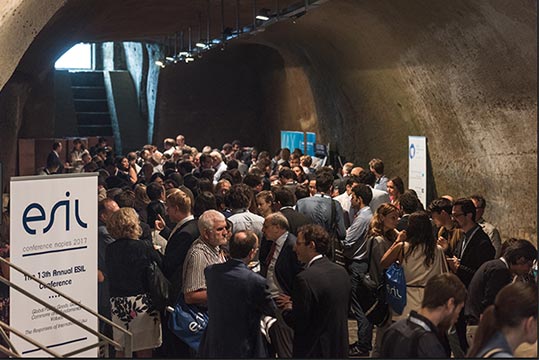
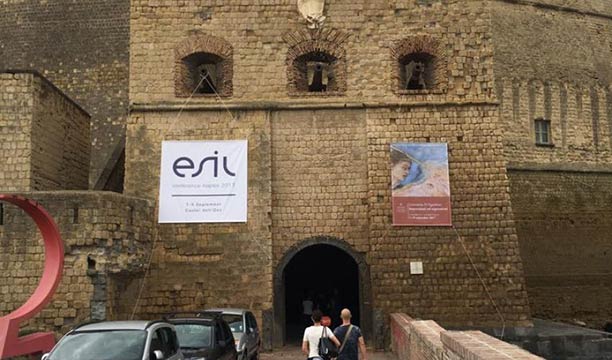
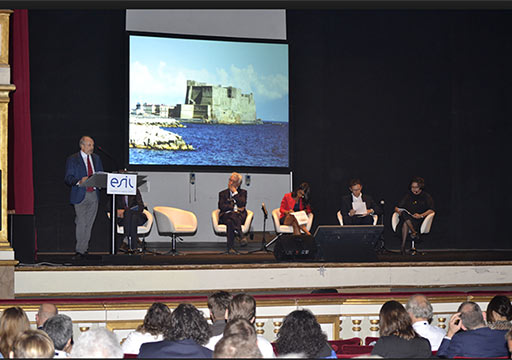
Some 500 members of the ESIL attended this year’s conference under the theme “Global Public Goods, Global Commons and Fundamental Values: The Responses of International Law”. Hosted by University of Naples Frederico II, sessions convened at the 12th Century historic castle Castel dell'Ovo overlooking the Bay of Naples. Topics of the different panels ranged from the right to water, regulating public goods, peace and security, common heritage, common concern and common areas, post-Paris assessment of the climate change regime, protection of cultural heritage, trade and investment, erga omnes obligations, fundamental values in international law, refugee protection, and cyberspace.
WCEL Members in attendance this year included Nilufer Oral (Member, WCEL Steering Committee), Christina Voigt (Chair, WCEL Climate Change Specialist Group), and Maria Banda who recently represented the Commission at the Inter-American Court of Human Rights. Nilufer Oral spoke on the need to recognize the conservation of the areas beyond national jurisdiction as a common concern of humankind, and the opportunity afforded by the process underway at the United Nations for a new agreement to define the principle of common concern. Christina Voigt, together with Felipe Ferreira of the Brazilian delegation to the UN Framework Convention on Climate Change, made a presentation assessing the Paris Agreement specifically focusing on the importance of the rule of progression for States in preparing their nationally determined contributions to mitigation under the Paris Agreement. Maria Banda’s presentation addressed the need for transboundary climate adaptation and state duties under international law.
CONFERENCE PROGRAMME

- 6th September
- 7th September
- 8th September
- 9th September
6th September
Day 1 Programme
WEDNESDAY, SEPTEMBER 6, 2017 - INTEREST GROUPS
Registration
10:00 - 17:00
Registration will take place all day long at the premises of Unina – Federico II
Pre-conference ESIL Interest Groups Events
11:00 - 18:00
7th September
DAY 2 PROGRAMME
THURSDAY, SEPTEMBER 7, 2017 - 1ST DAY OF CONFERENCE
Registration
09:00 - 10:00
Venue: Theatre of Royal Palace of Naples
Welcome and Introduction
10:00 - 10:45
André Nollkaemper (University of Amsterdam, ESIL President)
Massimo Iovane (Chair of International Law, University of Naples Federico II)
Gaetano Manfredi (Chancellor, University of Naples Federico II)
Lucio de Giovanni (Director of the School of Law, University of Naples Federico II)
Fulvio Maria Palombino (Chair of International Law, University of Naples Federico II)
Venue: Theatre of Royal Palace of Naples
Keynote Lecture
10:45 - 12:00
Sundhya Pahuja (University of Melbourne)
Venue: Theatre of Royal Palace of Naples
Walk from the Royal Palace to Castel dell’Ovo; all events from this point on will be at Castel dell’Ovo
12.00 - 12:00
Lunch
12:30 - 14:00
Venue: Castel dell’Ovo
Parallel Agora
14:00 -15:30
Agora 1: The Right to Water in International Law
Agora 2: Global Public Goods: Regulatory and Governance Challenges
Agora 3: Solidarity and the Promotion of Peace and Security
Venue: Castel dell’Ovo
Parallel Fora
15:50 - 17:10
Forum 1: Common Heritage, Common Concern and Common Areas: The Changing Role of States and International Organizations
Forum 2: Global Public Goods: Between International Law and Economics
Venue: Castel dell’Ovo
Coffee Break
17:10 - 17:40
Parallel Agora
17:40 - 19:10
Agora 4: The Protection of Cultural Heritage in International Law
Agora 5: New Challenges in the Fight against Terrorism
Agora 6: International Adjudication as a Global Public Good?
Venue: Castel dell’Ovo
Interview
19.15 - 20.15
Joseph Weiler interviews Philippe Sands on his book “East West Street”
Pizza Evening
20:30 -
@Ristorante Fresco – Via Partenope, 8 – Napoli
See Registration Page for further information
8th September
DAY 3 PROGRAMME
FRIDAY, SEPTEMBER 8, 2017 - 2ND DAY OF CONFERENCE
Parallel Agora
09:00 - 10:30
Agora 7: The Climate Regime: A Post-Paris Assessment
Agora 8: Liberalizing Trade and Investment as a Global Public Good
Agora 9: The Fight against Impunity: An Appraisal
Venue: Castel dell’Ovo
Coffee Break
10:30 - 11:00
Parallel Fora
11:10 - 12:40
Forum 3: Identifying and Implementing Erga Omnes Obligations: The Role of Procedure
Forum 4: Global Public Goods, Global Commons and Fundamental Values: The Impact of Fragmentation
Venue: Castel dell’Ovo
Lunch
12:40 -
Lunch meeting for IL journal editors
12:40 -
ESIL Mentoring event
12:40 -
Breaking into and Succeeding in Academia: Tips for the first 5 Years
ESIL General Assembly
14:00 -
Conversation with ESIL Book Prize winner
15:00 - 15:45
Coffee Break
15:45 - 16:45
Parallel Agora
16:20 - 17:50
Agora 10: Financial Stability as a Global Public Good?
Agora 11: Refugee Protection: A Test for European Fundamental Values?
Agora 12: The Defence of General Interests in Cyberspace
Venue: Castel dell’Ovo
ESIL Board meets IG conveners
17:50 - 18:50
ESIL Board meets new members
17:50 - 18:50
Guided tour and Conference dinner
19:45 -
@Catacombe di San Gennaro
See Registration Page for further information
9th September
DAY 4 PROGRAMME
SATURDAY, SEPTEMBER 9, 2017 - CLOSING DAY OF CONFERENCE
Parallel Fora
09:00 - 10:30
Forum 5: Fundamental Values and International Law
Forum 6: Current Events: Brexit and International Law
Venue: Castel dell’Ovo
Coffee Break
10:30 - 11:00
Closing Keynote Lecture
11:10 - 12:10
Riccardo Pisillo Mazzeschi (University of Siena)
Closing Session
12:10 - 12:40
THE EUROPEAN SOCIETY OF INTERNATIONAL LAW
ESIL was set up in Florence in May 2004 in response to a a strongly felt need for a general European network to bring together and to develop deeper understanding among people working in the field of international law. Since 2004, ESIL has become an increasingly important meeting place for scholars, young researchers and practitioners interested in international law. The Society’s goals are to encourage the study of international law, to foster inquiry, discussion and innovation, and to promote a greater understanding of the role of international law in the world today.
ESIL is a dynamic network of academics, researchers, students, lawyers, judges, government officials, diplomats, legal advisers, etc. To date, ESIL has attracted more than 3,000 members from over 100 countries, and membership continues to expand year by year.
The Secretariat of the Society is based at the Academy of European Law at the European University Institute in Florence and the activities of the Society continue to be generously supported by the European University Institute.
The Society is managed by the ESIL Board.
ESIL EVENTS
There has been a major ESIL event each year since the 2004 inaugural conference:
INAUGURAL CONFERENCE: 'INTERNATIONAL LAW IN EUROPE: BETWEEN TRADITION AND RENEWAL'
Florence, Italy. 13-15 May 2004
RESEARCH FORUM: 'INTERNATIONAL LAW: CONTEMPORARY ISSUES'
Geneva, Switzerland. 26-28 May 2005
BIENNIAL CONFERENCE: 'INTERNATIONAL LAW: DO WE NEED IT?'
Paris, France. 18-20 May 2006
RESEARCH FORUM: 'THE POWER OF INTERNATIONAL LAW IN TIMES OF EUROPEAN INTEGRATION'
Budapest, Hungary. 28-29 September 2007
BIENNIAL CONFERENCE: 'INTERNATIONAL LAW IN A HETEROGENEOUS WORLD'
Heidelberg, Germany. 4-6 September 2008
ESIL –ASIL RESEARCH FORUM: 'CHANGING FUTURES: SCIENCE AND INTERNATIONAL LAW’
Helsinki, Finland. 2-3 October 2009
BIENNIAL CONFERENCE: 'INTERNATIONAL LAW 1989-2010: A PERFORMANCE APPRAISAL'
Cambridge, UK. 2-4 September 2010
RESEARCH FORUM: ‘INTERNATIONAL LAW AND POWER POLITICS: GREAT POWERS, PERIPHERIES AND CLAIMS TO SPHERES OF INFLUENCE IN THE INTERNATIONAL NORMATIVE ORDER’
Tallinn, Estonia, 27-28 May 2011
BIENNIAL CONFERENCE: 'REGIONALISM AND INTERNATIONAL LAW'
Valencia, Spain. 13-15 September 2012
RESEARCH FORUM: ‘INTERNATIONAL LAW AS A PROFESSION’
Amsterdam, The Netherlands. 23-25 May 2013
10TH ANNIVERSARY CONFERENCE: 'INTERNATIONAL LAW AND... BOUNDARIES OF INTERNATIONAL LAW AND BRIDGES TO OTHER DISCIPLINES’
Vienna, 4 - 6 September 2014
ANNUAL CONFERENCE: 'THE JUDICIALIZATION OF INTERNATIONAL LAW – A MIXED BLESSING?'
Oslo, 10 - 12 September 2015
ANNUAL CONFERENCE: 'HOW INTERNATIONAL LAW WORKS IN TIMES OF CRISIS?'
Riga, 8 - 10 September 2016
After Naples, future Annual Conferences are planned in Manchester (2018) and Athens (2019).
As well as these large-scale annual events, ESIL also organises an increasing number of workshops, seminars, conferences and lectures at different venues around the world throughout the year, including events arranged by the Society’s Interest Groups.
MEMBERSHIP
Membership of the Society is open to all those with an interest in international law. Members receive a range of benefits, including reduced registration fees for ESIL events, the opportunity to join any of the 15 Interest Groups, an annual online subscription to the European Journal of International Law, one of the world’s leading international law journals, and quarterly Newsletters and monthly ESIL Reflections and ESIL Updates.
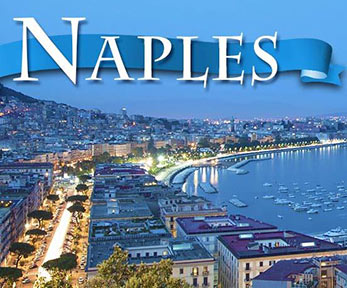
INSIDE NAPLES
Historical Centre (Centro Storico):
Naples’s heart is the historic centre, which UNESCO has declared a Cultural Heritage site. Its narrow alleyways lead to mysterious churches, catacombs and underground caves. Even today Naples’s traditional culture is revealed by craftspeople, fluttering laundry, and shouting fish sellers. The historic city is characterized by many churches of Romanic, Gothic and Baroque styles, buildings belonging to aristocratic families, and historical residences. The number of attractions is so vast that it would be impossible to complete a tour of the city within a week. We strongly recommend visiting the following places:
- Cappella di San Severo
- Napoli Sotterranea
- Santa Chiara (church and cloister):
- San Gregorio Armeno (the street of Neapolitan “Presepe”)
- Teatro di San Carlo (the oldest opera house in the world):
- Castel Nuovo
Please note that the Conference venues – Castel dell’Ovo, the Royal Palace and San Gennaro’s Catacombs – are also very important tourist attractions.
We strongly suggest having a pizza in one of the several traditional “pizzerie” located in the historic centre to enjoy the most typical Neapolitan food.
Outside the centre, we suggest a visit to San Martino Monastery.
OUTSIDE NAPLES
Pompeii:
Pompeii was an ancient Roman town-city near modern Naples Pompeii, along with Herculaneum and many villas in the surrounding area, was mostly destroyed and buried by volcanic ash and pumice in the eruption of Mount Vesuvius in 79 AD.
Researchers believe that the town was founded in the 7th or 6th century BC by the Osci or Oscans.
The eruption destroyed the city, killing its inhabitants and burying it under tons of ash. Evidence for the destruction originally came from a surviving letter by Pliny the Younger, who saw the eruption from a distance and described the death of his uncle Pliny the Elder, an admiral of the Roman fleet, who tried to rescue citizens. The site was lost for about 1,500 years until its initial rediscovery in 1599 and broader rediscovery almost 150 years later by the Spanish engineer Rocque Joaquin de Alcubierre in 1748.The objects that lay beneath the city have been preserved for centuries because of the lack of air and moisture. These artefacts provide an extraordinarily detailed insight into the life of a city during the Pax Romana. During the excavation, plaster was used to fill in the voids in the ash layers that once held human bodies. This allowed archaeologists to see the exact position the person was in when he or she died.
Pompeii has been a tourist destination for over 250 years. Today it has UNESCO World Heritage Site status and is one of the most popular tourist attractions in Italy, with approximately 2.5 million visitors every year.
Tour: http://www.pompeitickets.com/en/
Capri:
Capri is a wonderful island (known as the “Pearl of the Mediterranean Sea”) located in the Tyrrhenian Sea off the Sorrentine Peninsula, on the south side of the Gulf of Naples . The main town Capri shares the name of the island. It has been a resort since the time of the Roman Republic.
Some of the main features of the island include the following: the Marina Piccola (the little harbour), the Belvedere of Tragara (a high panoramic promenade lined with villas), the limestone crags called sea stacks that project out of the sea (the Faraglioni), the town of Anacapri, the Blue Grotto (Grotta Azzurra), and the ruins of the Imperial Roman villas.
More information: http://www.capri.com/en/s/tour-of-the-island
Procida:
Procida is the smallest island in the Campanian archipelago. Of volcanic origin, Procida is also connected to the island of Vivara by a narrow bridge.
Enjoy its narrow streets and churches, and walk through the town centre to admire the architecture of centuries past: the Abbey of San Michele Arcangelo, which had a central role in Procida’s religious and cultural history, is worth visiting. It rises on the Terra Murata promontory, with the sea a steep drop below.
More information: http://www.visitprocida.it/en
Ischia:
Ischia is a volcanic island in the Tyrrhenian Sea. It lies at the northern end of the Gulf of Naples, about 30 kilometres from the city of Naples. It is the largest of the Phlegrean Islands. The island is very well-known for its beaches, its food and for its thermal waters.
More information: http://www.ischiareview.com/things-to-see-in-ischia.html
Amalfi and Sorrento Coasts:
These two coasts (on two opposite sides of the mountains of the “Parco dei Monti Lattari”) are known all over the world for their amazing views, for the architecture, the sea and the food. We strongly suggest visiting Ravello, Amalfi, Positano and Sorrento.
More information available at: http://www.enjoythecoast.it/en/ .

More Background On ESILConference2017.com
ESILConference2017.com served as the official digital platform for the 13th Annual Conference of the European Society of International Law (ESIL), held in Naples, Italy in September 2017. The website functioned not merely as a logistical information hub, but as a comprehensive intellectual gateway into one of the most significant gatherings of international law scholars, practitioners, judges, policymakers, and researchers of the decade.
The conference theme—“Global Public Goods, Global Commons and Fundamental Values: The Responses of International Law”—addressed pressing transnational legal challenges at a time when globalization, climate change, digital governance, migration, and international security were reshaping the legal order. ESILConference2017.com documented these debates, framed their scholarly relevance, and preserved the intellectual structure of the event for future reference.
Although the site was event-specific and time-bound, its content remains historically and academically relevant, offering insight into how international law communities conceptualized collective global interests in the mid-2010s.
Ownership and Institutional Affiliation
ESILConference2017.com was operated under the auspices of the European Society of International Law, an academic and professional association founded in 2004 to foster scholarly exchange and research in international law across Europe and beyond. The site was produced in collaboration with local host institutions in Naples, most notably the University of Naples Federico II, one of Europe’s oldest universities.
The European Society of International Law itself is institutionally supported by the European University Institute in Florence, where its secretariat is based. The conference website reflected ESIL’s broader mission: to promote rigorous legal scholarship, encourage interdisciplinary dialogue, and provide inclusive platforms for both established experts and early-career scholars.
The site was not commercially owned, monetized, or sponsored in the traditional sense. Instead, it functioned as a non-profit academic resource aligned with ESIL’s educational and scholarly objectives.
Location and Physical Context
The conference documented on ESILConference2017.com took place in Naples, Italy, a city whose historical, cultural, and political significance deeply complemented the conference theme. Sessions were held in prominent venues including the Royal Palace of Naples and the Castel dell’Ovo, a 12th-century seaside fortress overlooking the Bay of Naples.
The website provided detailed contextual information about Naples, emphasizing its UNESCO-recognized historic center and proximity to sites such as Pompeii, Capri, Ischia, Procida, and the Amalfi Coast. This framing reinforced the idea that international law does not exist in abstraction, but within lived cultural, historical, and geopolitical environments.
By situating the conference within Naples’ layered history, ESILConference2017.com subtly underscored the enduring tension between sovereignty, shared heritage, and collective responsibility—core themes of the conference itself.
Historical Background and Purpose of the Website
ESILConference2017.com emerged as part of ESIL’s evolving digital strategy to centralize conference information, promote transparency, and extend access beyond physical attendance. Earlier ESIL events relied more heavily on printed programs and decentralized web pages, but by 2017, dedicated conference websites had become essential scholarly infrastructure.
The site was designed to:
-
Present the intellectual framework of the conference
-
Publish the full multi-day program
-
Introduce keynote speakers and panel themes
-
Provide logistical guidance for international attendees
-
Serve as a long-term archival record
Unlike promotional event websites aimed at broad public audiences, ESILConference2017.com targeted a specialized academic and professional readership, prioritizing clarity, depth, and intellectual rigor over marketing aesthetics.
Conference Theme and Intellectual Scope
At the heart of ESILConference2017.com was its articulation of the conference’s central theme: the regulation and protection of global public goods, global commons, and fundamental values under international law.
The website offered extensive conceptual explanations of each category, recognizing their overlapping yet distinct legal implications. Global public goods were framed as benefits or costs affecting all states and generations, such as climate stability or public health. Global commons were described as domains beyond national jurisdiction, including oceans, outer space, and emerging intangible commons like cyberspace or genetic heritage. Fundamental values encompassed universal principles such as human rights, dignity, peace, and environmental protection.
Importantly, the site acknowledged that these concepts are contested and evolving, reflecting ongoing debates within international legal theory and practice. This framing positioned the conference not as a forum for settled answers, but as a space for critical inquiry and methodological reflection.
Program Structure and Scholarly Design
ESILConference2017.com meticulously documented a multi-day program structured around Fora and Agora sessions, reflecting ESIL’s distinctive approach to conference design.
Fora addressed broader methodological and theoretical issues, such as fragmentation in international law, erga omnes obligations, and the role of international organizations. Agora sessions focused on specific substantive challenges, including refugee protection, financial stability, climate governance, terrorism, cultural heritage, and cyberspace.
The site detailed keynote lectures by prominent scholars, including internationally recognized figures in international legal theory and practice. It also highlighted interviews, mentoring sessions, and informal scholarly exchanges, reinforcing ESIL’s commitment to community building and intellectual mentorship.
Audience and Community Engagement
The primary audience of ESILConference2017.com consisted of international law scholars, doctoral researchers, legal practitioners, judges, government legal advisers, and international organization officials. However, the site was also accessible to journalists, students, and members of civil society organizations engaged with global governance issues.
By clearly outlining registration processes, membership benefits, and mentoring opportunities, the site actively encouraged participation from early-career scholars and those new to the ESIL community. This inclusivity reflects ESIL’s broader institutional culture, which values generational renewal and geographic diversity within international law.
Popularity and Reach
While ESILConference2017.com was not a mass-traffic website, its influence was significant within its niche domain. ESIL conferences routinely attract several hundred participants from dozens of countries, and the 2017 Naples conference was among the most widely attended in the Society’s history.
The site’s content was referenced by academic institutions, professional networks, and international organizations in the months leading up to the conference. Its archival pages continue to be accessed by researchers seeking historical context on debates surrounding global public goods and commons in the pre-pandemic era.
Press and Media Coverage
The conference documented on ESILConference2017.com received coverage from academic journals, international law blogs, university news outlets, and institutional publications associated with organizations such as environmental law commissions and international courts.
Rather than generating mainstream media headlines, the event’s impact was felt through scholarly citations, conference reports, and subsequent publications by participants. The website thus functioned as a foundational reference point for post-conference dissemination and academic follow-up.
Cultural and Social Significance
ESILConference2017.com captures a moment in time when international law was grappling with accelerating global interdependence and rising skepticism toward multilateralism. The conference took place amid debates over Brexit, climate commitments following the Paris Agreement, and growing concerns about digital governance and inequality.
By foregrounding concepts like solidarity, common concern, and shared values, the site reflects a normative commitment to collective responsibility that continues to shape international legal discourse today. In retrospect, the conference can be seen as prescient, anticipating challenges that would intensify in subsequent years.
Archival Value and Legacy
Today, ESILConference2017.com stands as an archival artifact of scholarly life in the late 2010s. Its preserved structure, language, and priorities provide insight into how international law communities organized knowledge, debate, and professional exchange before the disruptions of the COVID-19 era.
For researchers, educators, and institutional historians, the site offers a valuable snapshot of ESIL’s intellectual trajectory and the broader evolution of international legal thought.
ESILConference2017.com was far more than a temporary event website. It functioned as an intellectual map, institutional record, and scholarly resource that encapsulated one of the European Society of International Law’s most ambitious conferences. Through its careful documentation of themes, programs, and institutional context, the site continues to inform understanding of how international law responds to shared global challenges.
Its enduring relevance lies not in ongoing updates, but in its preservation of a critical moment in international legal history—one defined by urgent questions about governance, values, and the collective stewardship of a rapidly changing world.